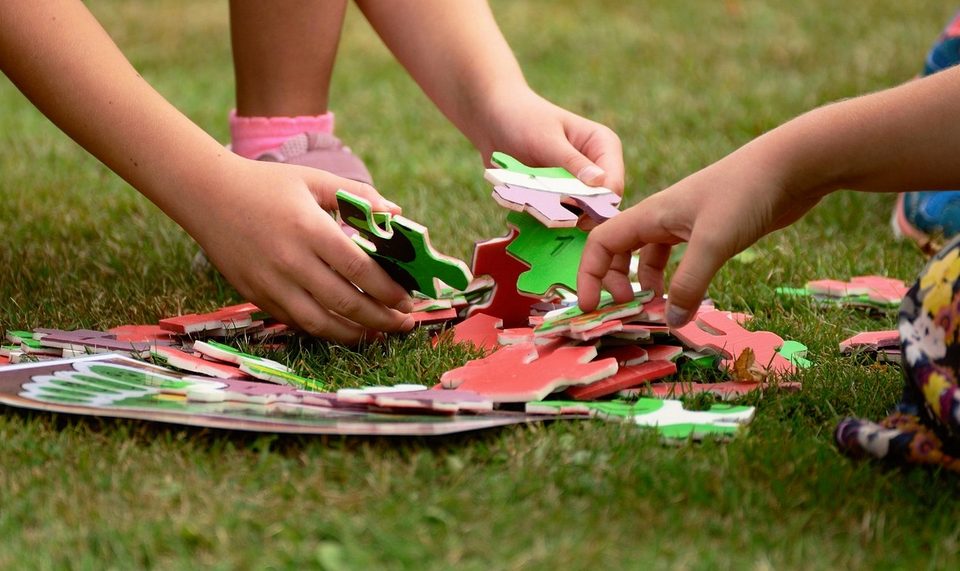
How educational wooden puzzles support child development
Wooden puzzles may look like simple toys, but they influence a child's fine motor skills, spatial sense and ability to recognise letters in several ways. This article explains, focusing on the principles, what kind of development takes place as children handle and fit the pieces.
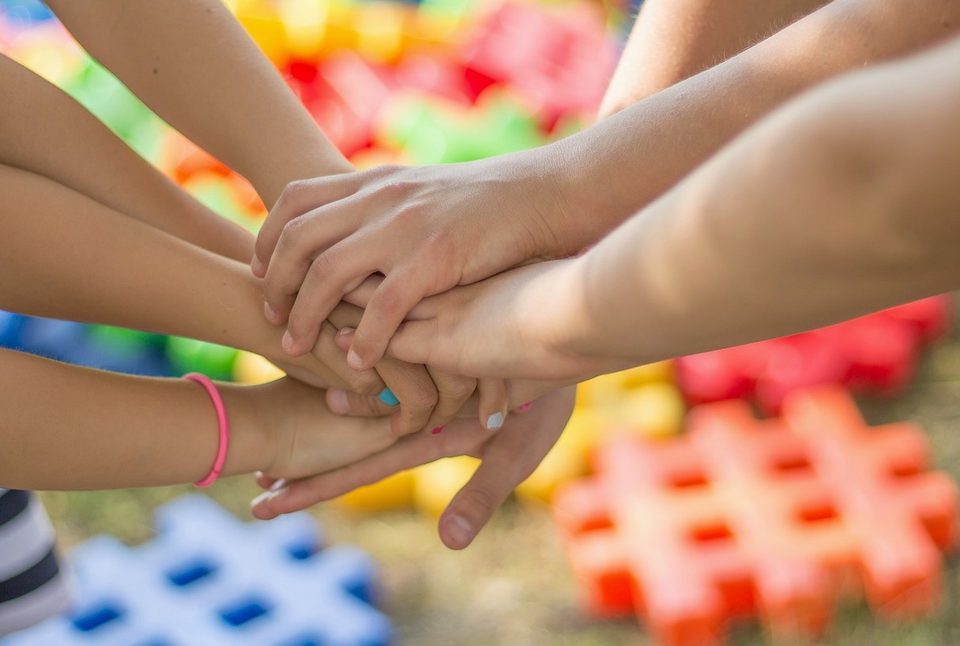
Choosing a difficulty level that suits your child's age matters more than you might think.
Finger Strength and the Principles of Fine Motor Development
Lifting a wooden puzzle piece and pushing it into its gap uses more muscles than you might think. When a child holds the edge of a piece between thumb and index finger, they learn to control the strength of their fingertips. Gripping too hard sends the piece flying, and gripping too softly lets it drop, so the child naturally learns to judge how much force to use.
Repeatedly turning and rotating the pieces keeps the wrist and finger joints moving smoothly. These movements form the foundation for everyday actions later on, such as holding a pencil to draw lines or buttoning clothes. Fine motor skills do not develop all at once but build up through small repeated movements, so puzzle play becomes steady practice.
Wooden pieces have a satisfying weight, so a child can feel the heft as they handle them. Their surface is warmer than plastic and has natural grain, which also gives tactile stimulation. Experiencing different textures through the fingertips supports sensory integration and gradually helps the child extend the time they can concentrate.
Building Spatial Sense Through Shape Matching
Checking whether a piece fits the empty space is an activity of comparing shape and position in the mind. The child turns the piece, examines the curves of its edges and works out where and how it goes. Through this process they intuitively learn how objects sit in space.
Spatial sense also forms the groundwork for subjects such as mathematics and science. The ability to recognise that a shape stays the same even when its orientation changes grows naturally as puzzles are matched again and again. When a child turns a piece that did not fit and tries a different direction, it is a sign that their problem-solving ability is growing.
It works well to start with puzzles that have few pieces to practise telling shapes apart, then gradually increase the number of pieces once the child is comfortable. Even with the same puzzle, giving the child time to solve it on their own builds a stronger sense of accomplishment. Encouraging them to describe the finished picture in their own words also develops the ability to express space in language.
- Turn a piece to try different orientations
- Compare the shape of the gap with the curves of the piece
- Retry a piece that didn't fit from a different position
- After completing it, describe where the picture's parts are
Recognising Hangul Through Letter Pieces
Puzzles that use letter pieces help children get to know the shapes of Hangul jamo. The child examines the forms of consonants and vowels and matches identical letters together, memorising how each letter looks. Shapes that are visually distinct feel less tedious than learning letters one by one by rote.
Hangul builds each syllable by combining consonants and vowels, so a game of fitting pieces together to complete a letter lets children experience this principle. By placing ㄱ and ㅏ side by side and watching them form 가, the child understands how the letter is made. Saying the sounds aloud along the way also strengthens the link between a letter's shape and its sound.
When using letter puzzles, it is good to encourage the child to read the letters aloud as they fit them. Meeting the same letter many times makes it familiar naturally, so repeating for even a short time is effective. Rather than forcing memorisation, letting them discover letters through play keeps their interest in Hangul going for a long time.
Choosing a Difficulty Level Suited to the Child's Age
Choosing a difficulty level that suits your child's age matters more than you might think. A puzzle that's too easy quickly loses its appeal, while one that's too hard can leave a child frustrated. The sweet spot is a puzzle your child can complete with a bit of thinking on their own. Start with a simple picture that has fewer pieces, and as your child grows comfortable, gradually increase the number of pieces and the complexity. Watching how your child picks up the pieces and works through the fit will naturally show you which stage is right for them.
If your child finds it hard to grip small objects, begin with puzzles that have large, easy-to-hold pieces. On the other hand, a child with steady hand control and a longer attention span can comfortably try puzzles with smaller pieces. What matters most is your child's actual response rather than their age alone. Children of the same age can have very different interests and levels of hand coordination, so one measure is rarely enough to judge. Adjusting the difficulty little by little to fit your child works far better than sticking to the same level every time.
When raising the difficulty, it's safest to step up in small increments rather than making a big jump at once. Moving on to the next level after your child has succeeded several times and feels confident helps keep their motivation steady. If they keep struggling, consider offering hints so they don't give up right away. As your child builds up the experience of doing something on their own, they grow the attitude of taking on harder challenges. The gradual process of raising the level is itself a valuable record of your child's growth.
How parents can play together
When a parent sits alongside and plays together, the educational benefits of wooden puzzles increase considerably. Talk with your child while they choose pieces, and celebrate together each time they find the right place. Rather than telling the answer right away, asking questions encourages your child's thinking. For example, asking "Where do you think this piece goes?" prompts your child to look around and figure it out for themselves. Conversations like this build both language skills and logical reasoning.
When playing together, respecting your child's pace is the most important thing. If an adult snaps the pieces in first, the child loses the chance to try and their interest fades. Give them the patience to work with their own hands, even if it's a little slow. Asking them to explain the pieces they've fitted helps the memory stay with them longer. Wrapping up with a short conversation about the picture or the letters after playing is a nice way to finish.
Setting a play time helps your child develop the habit of focusing regularly. Several short sessions tend to suit a child's attention span better than one long stretch. If your child seems bored, don't force them to continue; switch to another activity instead. The happy time you spend together as parent and child will stay in their heart longer than the skill of fitting puzzle pieces. Consistent play together plants positive memories of learning in your child.
Basic safety rules
To use wooden puzzles safely, it's wise to follow a few basic rules. First, be careful that your child doesn't put small pieces in their mouth. Young toddlers in particular can have a piece lodge in their throat, so always keep an eye on their surroundings. If a piece goes missing or any part becomes damaged, stop using it right away and check its condition. Keeping the play area tidy can also reduce accidents from tripping or stepping on pieces.
When choosing a product, it helps to check that the surface is smoothly finished. Rough edges or sharp parts left on the wood can cause cuts on a child's hands. If the product is painted, read the product description carefully to confirm the paint is suitable for items children handle. When cleaning, use a soft cloth and lukewarm water, and avoid soaking the wood for long periods. Wood can be vulnerable to moisture, so dry it thoroughly after use and store it carefully.
Because children can get absorbed in play and lose track of their surroundings, steady attention from a caregiver is essential. Put away small parts that are not suitable for the child's age in advance, and take extra care when several children play together. It is also a good habit to briefly explain how to use the toy and its precautions in words the child can understand. Small efforts to follow safety rules keep the time your child spends happily learning well protected.
- Store small pieces out of reach of babies and toddlers
- Stop using any piece with rough edges or damage right away
- Check the product description to confirm the paint and finish suit the intended child use
- Clean gently with a soft cloth and lukewarm water
- After play, store in a dry place so the wood can dry well
Key takeaways
-
Difficulty Watch how your child handles and responds to the pieces, and adjust the difficulty in small steps.
-
Play together Rather than giving the answer right away, use questions to draw out your child's thinking.
-
Safety Make small-part management and checking the product finish your basic safety rules.
This article is for general information only and does not replace professional advice.